



What’s the TL;DR?
Shatavari is widely recognized worldwide as an adaptogen. It offers various benefits to the body. However, those within the NBE community target its saponin content—as saponins are believed to enhance hormone receptor sensitivity, including the sensitivity of insulin receptors.
It is phytoestrogenic and employed primarily for its hormone balancing and sensitizing effects. As such, it should be considered a support substance and is not intended to be used in any regimen alone.
Shatavari may increase prolactin, however research is inconclusive.
Dosage and timing
In the NBE community, we do not target the Shatavari itself. Instead, we are targeting its saponin content, and most regimens target 1200mg of saponins. The amount of shatavari to dose will depend on its saponin content, so the table below can help.
| Saponin content listed | Shatavari Dosage |
|---|---|
| 50% | 2400mg |
| 40% | 3000mg |
| 25% | 4800mg |
Shatavari can be dosed all month, without regard to the menstrual cycle.
Shatavari is well tolerated, and some studies have used even up to 15g.
Further details
Shatavari (Asparagus racemosus) is an herbal supplement that contains steroidal saponins, also known as phytoestrogenic shatavarins, that are responsible for its medicinal properties. Shatavari has antioxidant, anti-inflammatory, hepatoprotective, and renoprotective effects.
Saponins
Saponins are close in relation to soap. As such, saponins affect the membranes of cells and break down substances. The cholesterol in human blood inactivates saponins, resulting in a non-toxic effect but also a cholesterol-lowering effect. Therefore, people with low cholesterol levels should be careful with the use of saponins.
Some saponins, particularly steroidal saponins, have a molecular structure similar to estrogen, allowing them to bind to estrogen receptors and exert estrogen-like effects in the body. This is the case with Fenugreek and Shatavari.
Available studies
In regard to saponins, they have been found to exhibit cytotoxic effects in cancer cells and not in normal cells at the same concentration.1
Shatavari has mixed results as a galactagogue. Some studies on humans and rabbits have found it to increase prolactin production,2 3 while others reported no difference in prolactin at all,4 or otherwise inconsistent results.5
Shatavari has been studied in menopausal contexts and found to relieve symptoms.6 Shatavari is known to be phytoestrogenic, and has been found to directly affect the mammary gland in rats.7
A 2024 study detailed the 10 different Shatavarin affinities for the female hormone receptor.8 The research identifies specific interactions and binding affinities and reports that while no binding to ERα was observed, other receptors showed varying affinities for different Shatavarin compounds. For instance, Shatavarin VI showed higher affinity for the progesterone receptor.
Meanwhile, another 2020 study specifically detailed Shatavaris affinity for targeting ERα.9
A group of researchers produced two studies10 11 detailing how Shatavari can improve muscle function in postmenopausal women.
Shatavari has also been found to help with depressive disorders.12
Products to consider
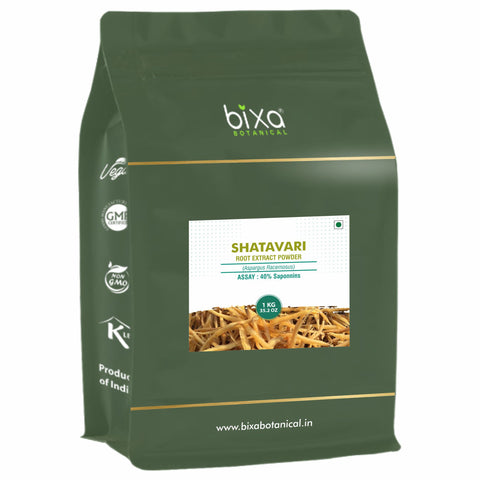
$60 1kg 40% saponin Shatavari extract – Bixa Botanical

$15 60ct 1200mg 50% saponin Shatavari extract – Roar to Life
References
- Therapeutic Effects of Saponins for the Prevention and Treatment of Cancer ↩︎
- Postpartum Use of Shavari Bar® Improves Breast Milk Output ↩︎
- Comparative Study of Oral Galactagogues ↩︎
- Randomized controlled trial of Shatavari as a lactogogue ↩︎
- A Review of Herbal and Pharmaceutical Galactagogues ↩︎
- Shatavari Root Extract for the Management of Menopausal Symptoms ↩︎
- Effect of Shatavari on mammary gland of pregnant rat ↩︎
- Docking analysis of shatavarins with female hormonal receptors ↩︎
- Shatavari targeting estrogen receptor α ↩︎
- Shatavari Improves Handgrip Strength in Postmenopausal Women ↩︎
- Shatavari alters the skeletal muscle in postmenopausal women ↩︎
- Adaptogenic property of Asparagus racemosus: Future trends and prospects ↩︎
