



What’s the TL;DR?
Omega-3s is another “miracle substance” that should be included with every regimen. The benefits range from mental health, to cardiovascular health, to reducing inflammation, to increasing growth hormones. Most people don’t consume enough omega3, but our diet consists mostly of omega6—usually found in cooking oils. An omega3/omega6 imbalance is commonly cited as the reason for inflammation and numerous other diseases.
Breasts require healthy fats to grow, and literally every benefit listed above. Breasts need everything omega3 has to offer, so it’s important to include it.
Dosage and timing
It’s less the omega3’s that we want to target, and more the EPA & DHA content that we need to target. Not all sources of omega3 are created equally.
- The best animal based omega3s are from cod liver oil or krill.
- The best plant based omega3s are from chia seeds or algae oil.
There isn’t an established reccomended dose, however more is better. Most experts agree that a ratio of 2:1 omega6:omega3 is the target. The NIH reported that “long-term consumption of EPA and DHA supplements at combined doses of up to about 5 g/day appears to be safe.“1 2
Personally, I take 1 spoonful (5ml) of cod liver oil per day.
Further details
For more information, I’d like to leave you with these two very informative videos.
Emerging research shows that DHA may have a more profound effect on inflammation than EPA—although both are important and affect different tissues.
These two articles can explain it better, so for more information, please see these:
- https://www.grassrootshealth.net/blog/dha-vs-epa-difference-take/
- https://now.tufts.edu/2020/12/07/new-study-finds-fish-oil-omega-3s-epa-and-dha-work-differently-chronic-inflammation
Omega3 from plants
Unlike fish oil, omega3 from plants such as chia seeds actually contain ALA, α-Linolenic acid, and this needs to be converted to EPA and DHA in the body. This process is terribly inefficient, and therefore plants are not the best source of omega3. However, chia seeds have numerous other nutritional benefits like magnesium, copper, zinc, and calcium. However, it’s important to note that in estrogen dominant persons, the convertible percent of ALA raises from about 1% to 10–20%.3
Products to consider
For products, I suggest searching locally while using the guide above. The easiest way to be done with this topic is to purchase a bottle of cod liver oil locally, and take a spoonful once per day. It shouldn’t taste fishy, and should be very easy to swallow.
If you are vegetarian, watching the above buyers-guide video and searching for a local algae oil would be recommended.
An affordable fish oil supplement is listed here, but keep in mind the EPA and DHA concentration is reversed from cod liver oil, and it doesn’t contain vitamin D3 and vitamin A:
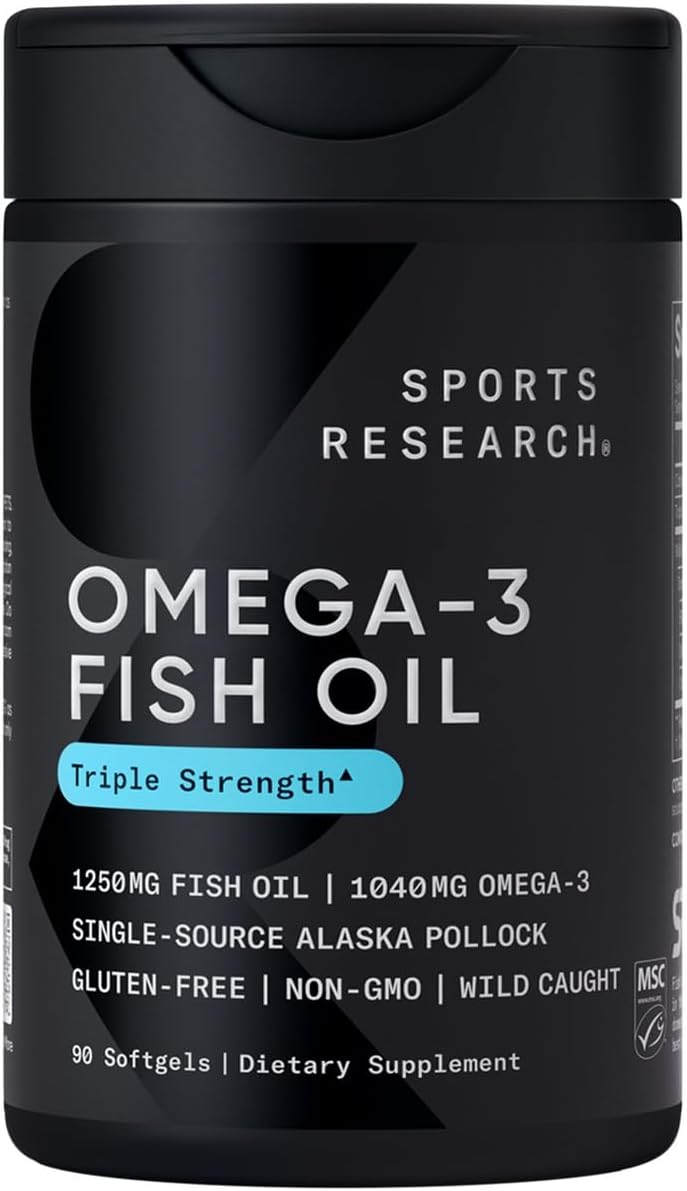
$30/90ct 1040mg Fish Oil concentrate – Sports Research

$30/60ct 1020mg Algae Oil – Sports Research
