
If it wasn’t obvious, humans are full of mutations.
While we share a common genetic blueprint, the way that blueprint manifests in each of us is strikingly individual. Consider the nuances of our biology: one person may thrive on a standard diet, effortlessly absorbing every vitamin and mineral, while another may struggle to process even the most basic building blocks, like vitamin B12, leading to unexplained fatigue.
This individuality extends beyond mere absorption; it dictates how we experience the world around us and our chemistry within. Hormones can have dramatically different effects per person. Progesterone, for instance, is normally a source of relaxation, yet can trigger profound sadness, anxiety, and despair in some—a condition known as PMDD.
Thus, we are not constrained to our genetics. Conditions like insulin resistance and hair loss, for example, can develop due to outside influence, often responding remarkably well to lifestyle adjustments and holistic resets. And, our breasts, they follow these same rules.
So—why again?—would we ever assume that a single NBE protocol could possibly work effectively for everyone? The very notion of a universal approach flies in the face of our inherent diversity.
When exploring the world of NBE, this reality becomes undeniable. Literally every NBE supplement or method you can look into will have people praising it, and also people swearing it didn’t work for them. This isn’t a flaw in the supplements themselves, but rather a testament to the beautiful, and often frustrating, truth of human variation. But…
But… hold on. Honestly… we are getting way ahead of ourselves. Let’s take a step back.
Before we can worry about which NBE supplements are “best,” we need to address our bodies. Breasts want to grow. They will grow. But they won’t grow without the right environment. Most people who come to NBE, for whatever reason, do not have an environment conducive to growing breasts. If you did have the right environment, you wouldn’t have had trouble growing until now. Note that I am not talking about stimulus. I’m talking about their environment.
Breasts need four things to grow.
- Nutrition
- A balanced hormone profile
- Hormone receptor sensitivity
- Blood flow & lymphatic drainage
Too many people expect that they will grow simply by adding more and more sex hormones. More and more stimuli. Honestly… without having each of the four areas above addressed, those people will usually end up just “spinning their tires.”
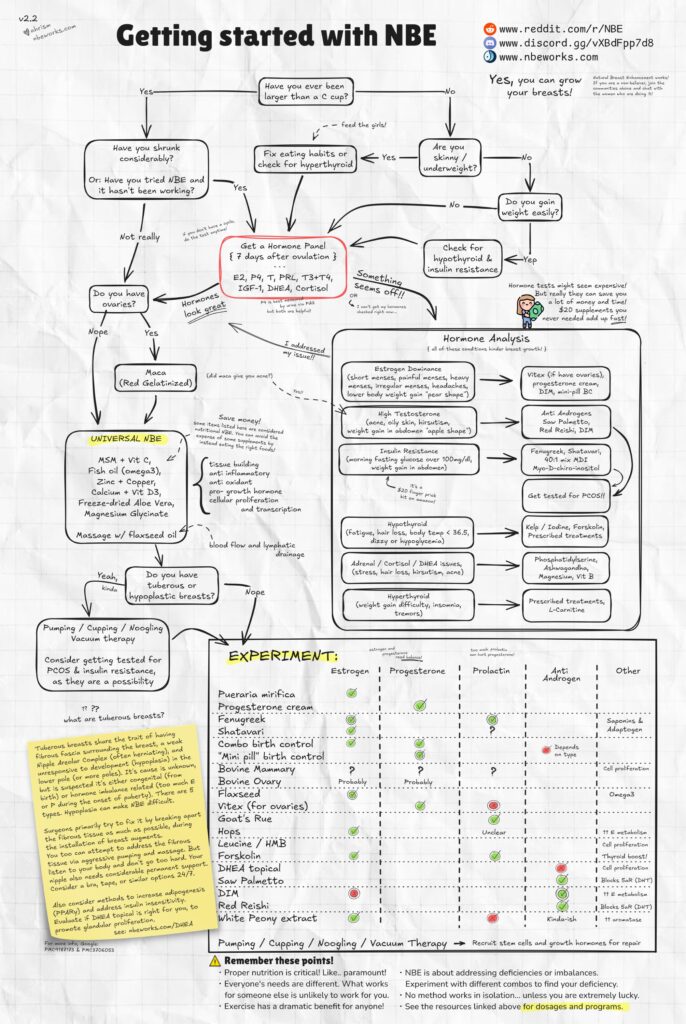
A strategic approach
I designed this flowchart to help you identify what could be problematic that is preventing you from growing naturally. It’s designed to give a bird’s-eye view of NBE, without being overly complicated.
Keep in mind, that everything in the “Hormone Analysis” section is considered an impediment to NBE. You need to fix these issues, as they will prevent you from growing optimally. Ignoring them will result in a waste of time, money, and sanity.
What about dosing?
You might next be wondering, “That’s great and all, but how much of the ‘experimental’ supplements do I take?” I intentionally left dosages out of the flowchart to keep it easy to read. Like always, the answer is: “It varies.”
You will need to experiment to see how much your body requires to create a response. In general, most of the “Universal NBE” supplements listed above don’t need dosage experimentation, just the “experimental” ones.
“
The very notion of a universal NBE approach flies in the face of our inherent diversity.
„
On this site you will find NBE programs that have been created by various individuals. Those are usually good inspiration for dosages. I also provide recommended dosages in the library section of this site. But keep in mind that you will—again—need to experiment and adjust for your needs. We are all different. Listen to your body, it does speak to you!
Hormone testing can give you an idea of what dose you’d need. For example, if you know that you are chronically low in estrogen, you can use a lot more phyoestrogenic herbs than a particular regimen might suggest.
All good?
Hopefully this gives you a better understanding of how it all works.
Here is a checklist for next steps:
- Select substances that agree with your current situation. For example, if you have high testosterone, select anti-androgens like Saw Palmetto, Red Reishi, or DIM. If insulin resistance is suspected, then myo-inositol.
- Look into dosages. If you selected Pueraria Mirifica for example, check out a few programs that used it or check to see if I have a page on Pueraria Mirifica for dosing.
- Read the “Specific considerations” section below.
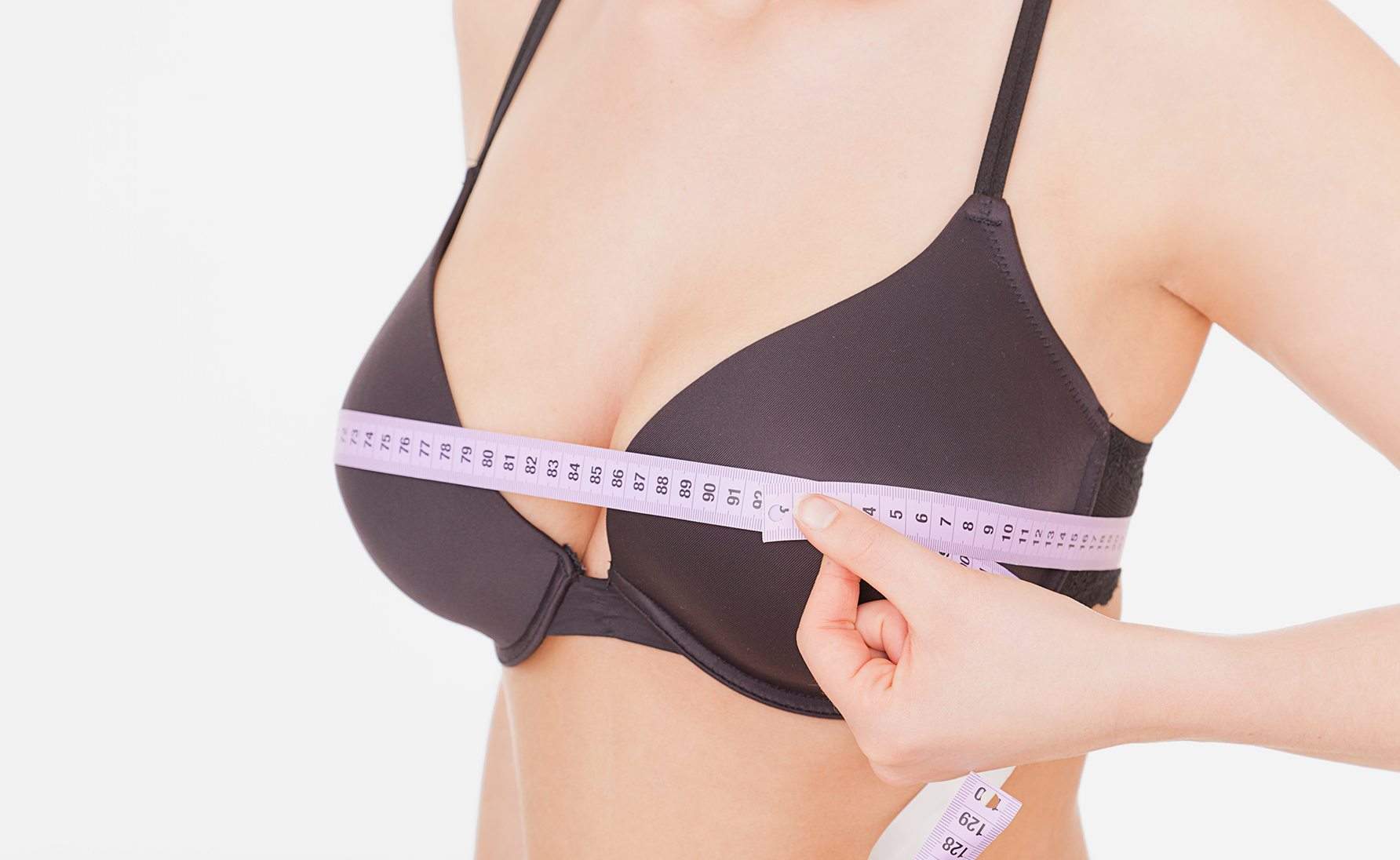
- Properly measure yourself using the ABTF method.
- Learn how to do breast massage.
- Consider incorporating breast pumping into your regimen.
- Give it at least 2 months to see any response.
As you progress through your NBE journey, I encourage you to join the community on Discord, Reddit, or BreastNexus, where we can help you with community feedback. If it’s all just too confusing, a generic well-rounded program can be found here.
If you want to ensure an optimal regimen, or if you’d prefer not to deal with any of this yourself, feel free to consider one-on-one coaching and consultation with me. I’d be happy to walk you through the entire process. See you around!
❤️ ahrism
Specific considerations
Cis adolescent girls and baby transfem
Cis teens under the age of 16 and baby trans who have been on HRT for less than 1 year really should avoid all forms of estrogenic and progestogenic NBE. This is especially true if you are seeing healthy development. Let your hormones run their course. However, you can and should still employ other aspects of NBE, like nutrition, and you should absolutely make sure you don’t have thyroid or other metabolic issues like insulin resistance.
Remember that a lot of NBE is proper nutrition and lifestyle. Exercise benefits breast growth for anyone. No, seriously girl, this is the perfect time to hit the gym! You also have plenty of non-hormonal supplements available to utilize, like MSM and Omega3.
Cis teens who are worried about any lack of development—or are worried about tuberous breasts—should push their parents for a hormone panel with an endocrinologist. Conditions like PCOS can be effectively managed with proper diagnosis. Like PCOS, tuberous breasts might be caused by insulin resistance and might be correctable if caught early on. Many girls anxious about masculinization during puberty use Spironolactone, an anti-androgen that is also frequently prescribed to women for acne. If there are no significant issues aside from the above disorders, it’s really best to avoid making any changes to your hormone profile at this stage. Breasts are not the only thing that react to hormones, you can cause other developmental issues like stunted hip growth by abusing hormones—high levels of estrogen will fuse growth plates that would normally have kept growing until 22~25 years old. Speak with endocrinologists to make sure you don’t have issues, but also don’t inadvertently cause issues that weren’t going to happen. Lastly, make sure to not crash-diet during adolescence, it’s just as bad as abusing hormones. Instead, exercise to get the figure you desire—and eat lots of low-calorie nutrient-dense foods and healthy fats.
Baby trans persons who are worried about any lack of feminization should similarly seek counseling within the DIY trans community as, regrettably, it’s too common that doctors don’t know what they are doing. Therefore, it’s extremely important to seek a second opinion. For the best chance at nice growth, start HRT with a low dose (2mg E2 oral or injections), and titrate up 2mg every month (aggressive) or two (conservative) until testosterone levels drop low enough. Employ 100-200mg spironolactone from day 1 until testosterone levels are satisfactory. Make sure you address thyroid, metabolic syndrome, and insulin insensitivity as well—this is critical. Do not add progesterone or progestins (including CPA) until at least 6 months of having stable E2 and T levels. Progesterone should be taken as a suppository, not oral. Oral progesterone is metabolized by the liver into other compounds. Lastly, do not diet during your first year on HRT. Many people when starting HRT want that nice figure but dieting will dramatically affect breast growth. If you want to lose weight, do it via exercise, NOT calorie restrictions. Nutrition is critical!
Cis women and trans AFAB
Persons with ovaries must consider their natural hormone production, and many express concerns about potentially disrupting their menstrual cycles. However, this disruption is often unavoidable. To reduce the risk of disruption you will want to limit estrogenic substances to the follicular phase, and progestogenic substances to the luteal phase. But don’t be alarmed if your first cycle is affected. Generally things even out by the second month. It’s important to remember that the body constantly strives for homeostasis, and once you stop any NBE activities, your hormones will revert to their baseline state. This is well studied regarding the employment of hormonal birth control and HRT used by cis women. It’s also important to remember that the body reacts to elevated hormone levels by reducing production from the ovaries.
One valuable supplement here is Maca, which helps by stimulating the ovaries via increased FSH and LH production in the pituitary. It can be considered as a primary method of elevating endogenous hormone production. See the page on Maca to learn if it’s something you’d be interested in trying.
Please remember that the use of hormonal birth control to prevent pregnancy can be compromised by hormonal NBE. Progestins work by preventing ovulation and by thickening the cervix. However, BC only prevents ovulation about 40% of the time, depending on the progestin used. Estrogenic substances may cause follicular development, increasing the potential for ovulation—although the cervix will remain thickened so that countermeasure will still be in place. Nonetheless, due to an increased chance of ovulation, relying on hormonal contraceptives while pursuing NBE could pose a pregnancy risk. I’ve seen at least one woman attribute her pregnancy to maca while on birth control.
Cis/Trans women and enbies on HRT
Persons undergoing HRT have the advantage of being able to modify their hormone levels as needed. Therefore, it’s typically unnecessary to spend money on hormonal NBE products like Pueraria Mirifica.
Remember that even if your HRT lab results fall “within the female range” and your doctor is satisfied with your hormone levels, this doesn’t guarantee that your breasts are satisfied; they may still be receiving too much or too little of the hormone. If you are taking oral progesterone, remember that the liver will metabolize 90% of it into neurosteroids resulting in a miniscule effective dose. Taking progesterone by suppository is recommended.
Again, while persons who are not on HRT usually rely on herbal methods to influence their hormone levels, those on HRT can simply adjust their dosage. Experimentation in this area is a key aspect of NBE. That said, it’s still ok to experiment with herbal hormonal approaches as well. It doesn’t hurt.
Two commonly used supplements that pre-op AMAB trans persons should avoid are Maca and Vitex. These supplements are useful only for those with pre-menopausal ovaries. These supplements also stimulate the testes, and therefore testosterone production. Therefore, they are usually not appropriate for this situation.
Cis/Trans men and non-HRT trans AMAB
Those with testosterone dominant bodies can certainly grow breasts, however testosterone will actively work against you. Testosterone dramatically suppresses any breast development. Notably, you will see significant difficulty growing breast buds and ductal tissue. That said, some men have seen success growing breasts using nothing other than suction devices over the course of years. pre-HRT men can certainly lactate, but whether their breasts have adequate mammary tissue comparable to a woman is questionable.
Medicinal anti-androgens (spironolactone and bicalutamide) are most likely the best approach for someone who wants to remain testosterone-dominant. Anti-androgens only block the receptor sites on cells, preventing androgens from being utilized. This will promote the conversion of testosterone into estrogen via aromatase, and also will prevent testosterone from suppressing breast growth. Bicalutamide is the most strongest anti-androgen, and would be the preferred approach. Keep in mind that it works on the entire body to block testosterone from reaching the receptor, but the concentration of androgens in the testes make it difficult for bicalutamide to have any effect there. The body needs a sex hormone, so blocking testosterone may make have effects on your mood and bone health, especially if aromatase cannot provide adequate estrogen.
For best results, you really should consider fully modifying your hormone environment. In some individuals this will result in temporary impotence, infertility, and decreased libido, however many do not experience impotence and can function fine. Infertility is reversible upon ceasing HRT. The probability of impotence should correlate to those who experience impotence on finasteride or dutasteride—about 10-20% of people.
Usage of phytoestrogens (Pueraria Mirifica, Hops), or substances such as White Peony to increase aromatase would be recommended for a more mild approach. Bovine Ovary is a popular supplement amongst those who do not have access to HRT and would be considered a more aggressive approach vs herbal options.
Herbal anti-DHT options, such as Red Reishi, are also available; however, their potency may not be sufficient to counteract the typical male level of DHT production. Check with a physician to obtain finasteride or dutasteride – they are commonly prescribed to prevent hairloss and have a good safety profile, so are usually provided without question.

It’s easy to forget, but try to remember
that we all respond to NBE differently!
